Meeting Minutes from "2–3 Days" to "Minutes": The Real Value of Practical AI at a Fukui Community Development Company
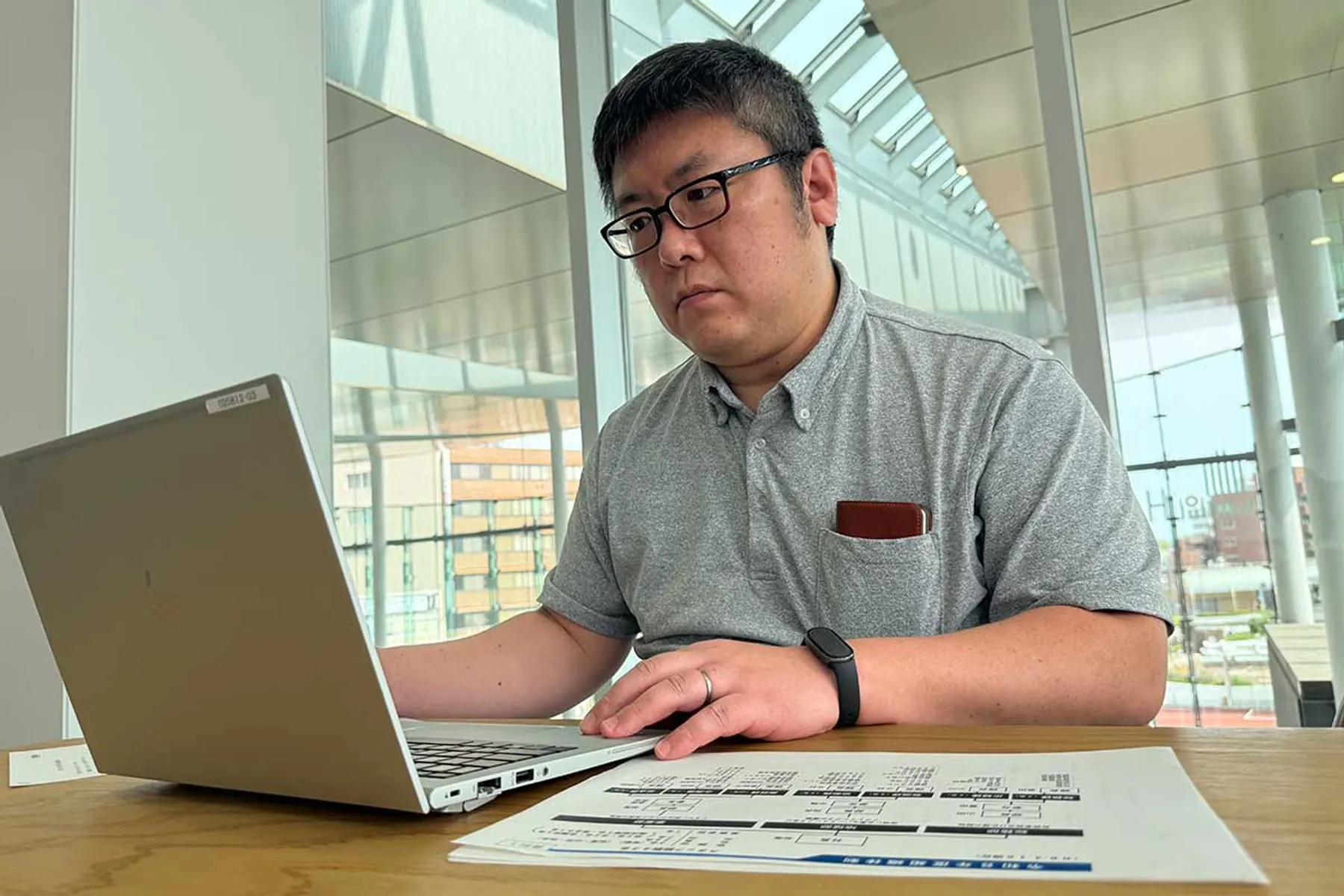
- At Machizukuri Fukui Co., Ltd., mitsumonoAI cut the time to draft board meeting minutes from 2–3 days to minutes.
- The File Analysis Assistant PRO processed the transcript of a two-hour meeting, roughly 50 A4 pages, in a single pass without splitting it.
- During the trial, the team used it almost every working day, and the project lead said the hours freed from minutes and documents created value that exceeded the cost.
- Minutes
- To draft meeting minutes (previously 2–3 days)
- ~50 pages
- A4 transcript of a two-hour meeting, processed in one pass
- Nearly a week
- Previous minutes time when juggled with other work
- Almost daily
- Usage on working days during the trial
In this article
- §1Before adoption: generative AI as a supplementary tool
- §2Meeting minutes: from 2–3 days to minutes
- §3Daily use: solving “I have the material, but can’t shape it”
- §4ROI and the path to company-wide adoption
- §5Why the team keeps choosing mitsumonoAI
- §6Who should use mitsumonoAI
- §7From your feedback to the next feature
- Q&A
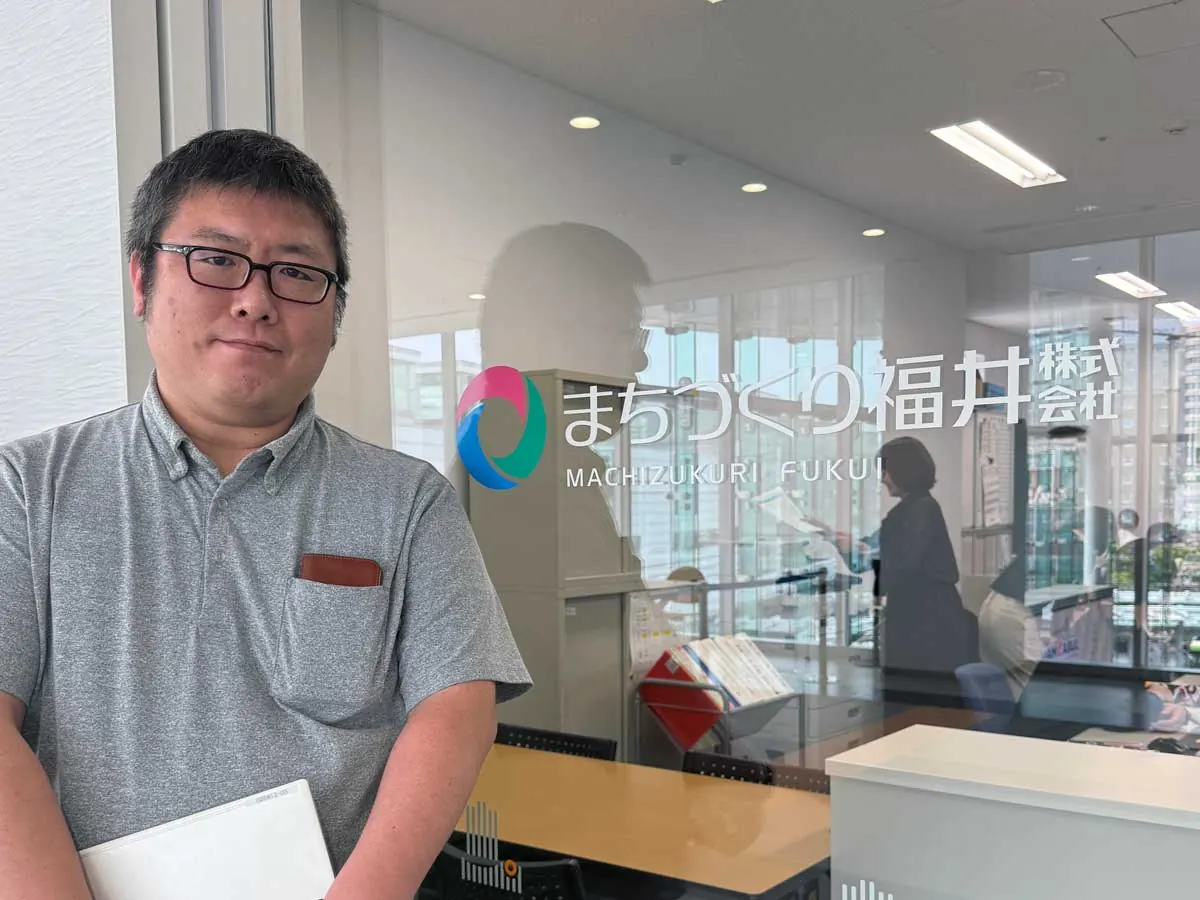
“Not just another generative AI. It’s a practical workflow partner that transforms how people work.” That’s how Mr. Kinoshita of the General Affairs Department at Machizukuri Fukui Co., Ltd., a community development company in Fukui Prefecture, describes mitsumonoAI.
Meeting minutes, site visit materials, contract pre-screening: we sat down with him to hear the real story of how AI is quietly but decisively taking root in daily operations.
Before adoption: generative AI as a supplementary tool
It started with a Tourism Academy workshop
The journey began when the team took part in the “Tourism Area Development Fundamentals Course” at the Fukui Prefecture Tourism Academy. FTAS-powered workshops raised their interest in data and new tools. While looking for ways to streamline operations, they discovered mitsumonoAI through people they met there.
At the time, they saw generative AI as “useful, but ultimately a supplementary tool.” The team had started using it for personal research, but concerns about accuracy and reliability made it hard to imagine building AI into core work. “It was helpful for drafting and summarizing, but we always assumed significant manual editing would be needed afterward.”
The quiet but constant burden of everyday tasks
On the surface, the company’s challenges were unremarkable: board meeting minutes, site visit and presentation materials, and preliminary contract reviews. None required extreme specialization, yet all demanded enormous time for organizing and formatting.
Meeting minutes were the biggest bottleneck. Speech-to-text errors, speaker attribution, and text formatting all took time. Even with focused effort, one set of minutes took 2–3 days, and when juggled with other work it could stretch to nearly a full week.
Presentation materials needed tone adjusted for each audience, and each revision made it harder to judge objectively which wording worked best. Contract pre-screening was ultimately handled by attorneys, but just identifying the key issues still took considerable time.
The company already subscribed to a speech-to-text AI service. Frequent transcription errors, however, meant that people still had to check and fix everything by hand. General-purpose AI tools helped with brainstorming but struggled with long documents and multiple files, always falling “just short.”
Meeting minutes: from 2–3 days to minutes
The first surprise: it restructures with context
The turning point came when the team fed speech-to-text data and meeting materials into mitsumonoAI together.
“It didn’t just fix typos. It restructured the content based on the flow of discussion. That was the moment I realized this wasn’t just an ‘assistant tool’ but something that produces work-ready output.”
The processing power of the File Analysis Assistant PRO was particularly impressive. The transcript of a two-hour meeting runs to roughly 50 A4 pages, and it handled the whole thing in a single pass without any trouble. Other AI tools required splitting the input because of input limits or loss of context, but mitsumonoAI fit straight into the existing workflow.
Equally striking was its accuracy with proper nouns. Using context such as the company’s location, it filled in place names and company names with high precision. It may seem minor, but this kind of attention to detail is exactly what builds trust in real work.
Drafting now takes minutes
The most dramatic improvement came in board meeting minutes. Previously, correcting transcripts, attributing speakers, and formatting text by hand took 2–3 days. With mitsumonoAI, the process up to a finished draft now completes in minutes.
Before
- Correct transcripts, attribute speakers, and format text by hand
- 2–3 days per set of minutes (nearly a week alongside other work)
After
- Feed the transcript and meeting materials into mitsumonoAI
- The process up to a finished draft completes in minutes
“The ability to handle detailed instructions like ‘keep it verbatim’ or ‘adjust the length’ makes it extremely practical for real work,” Mr. Kinoshita says. Balancing verbatim and summarized output, and formatting text for each purpose: this fine-grained control, not mere summarization, is what sets mitsumonoAI apart, he says.
Daily use: solving “I have the material, but can’t shape it”
Almost every working day
Asked how often he uses it, he answered right away: “Almost every working day.” He usually opens it at the early stage of organizing minutes or creating documents. “Rather than writing from scratch, I most often use it when I have raw material and need help organizing and structuring it.”
This pattern is closely tied to the nature of community development work. Site visit reports, presentation materials, meeting records: information piles up every day, but turning it into clear, readable documents takes time. mitsumonoAI greatly streamlines exactly this organizing and structuring step.
Brainstorming site visit and presentation materials with AI
For site visit and presentation materials, brainstorming with AI proved especially valuable. He used to ask colleagues for advice on structure and messaging. Now he has the AI organize the issues and suggest structures, so he can settle on a direction before he starts working.
“When I throw my half-formed thoughts at the AI, it becomes clear what I actually know and what I don’t.”
A shift in how work feels
The benefits go beyond numbers. “The way I approach work itself has changed,” Mr. Kinoshita says.
Tasks like minutes and document organization used to carry a psychological barrier: getting started felt like a burden. With AI handling the first draft and organization, that barrier has dropped, replaced by a “let me just get started” mindset.
Having a rough shape early in the process is also reassuring. It is easier to judge whether the direction is right, so he can move forward without hesitation.
ROI and the path to company-wide adoption
Value that exceeds the cost
“The time saved lets me allocate hours to other work, and that’s where the real value is. Tasks like minutes creation that used to consume so much time can now be handled quickly, improving overall efficiency. The value clearly exceeds the cost.”
Toward company-wide adoption
He was also candid about the challenges of rolling it out across the company. High-capability features like the File Analysis Assistant tend to consume more tokens, so continued use requires careful planning of usage volume. And where understanding of generative AI is not yet shared across the organization, adoption decisions can take time.
“Clearly communicating the real-world impact and showing concrete use cases is essential for driving adoption.”
Why the team keeps choosing mitsumonoAI
Built for real work
What Mr. Kinoshita values most about mitsumonoAI is its commitment to practical work, something generic AI tools don’t offer.
From brainstorming to file analysis, long-document processing, and business document formatting, mitsumonoAI covers every phase of the workflow. At the time of the interview, the File Analysis Assistant came in Standard and PRO editions, with configurable guardrails and blocking or masking options. He sees this task-specific flexibility as a sign of a tool designed for real business operations.
A service shaped by user feedback
Seeing the service evolve also motivates continued use. Features like the Recipe Creation function were developed from user testing feedback, and he has noticed ongoing improvements and specification updates. He has also shared his own input on token consumption and output quality during interviews with our team, and has felt those areas gradually improve.
Who should use mitsumonoAI
Mr. Kinoshita has a clear picture of the ideal user: people who have materials and information but spend too much time organizing and shaping them into final form.
“The more you use it, the more natural it feels. The more intentionally you engage with it, the better the results. That’s why it truly shines in real-world work.”
Looking ahead, he sees potential in using the Recipe Development Chef Agent in the food service division, the Persona Analysis Assistant for event planning, and the SNS Strategy Planner for PR. The wide range of specialized agents is a major draw for an organization that spans many departments.
Not just generative AI, but a “practical workflow partner.” Those words carry the weight of experience built through daily use. It isn’t flashy, but it changes how work gets done. The true value of mitsumonoAI reveals itself through continued use.
From your feedback to the next feature
The trial at Machizukuri Fukui ended with the move from the SaaS edition to Workspace. We have refined the feedback from Machizukuri Fukui on minutes creation further and built it into mitsumonoAI Workspace as a more advanced feature, scheduled for the December 2026 update.
mitsumonoAI’s features are now integrated into services such as mitsumonoAI Workspace, our enterprise generative AI platform. To talk about bringing it to your organization, get in touch through the mitsumonoAI Workspace page.
This article is based on an interview with Mr. Kinoshita of the General Affairs Department at Machizukuri Fukui Co., Ltd., originally published as a basicmath case study in May 2026. Feature names and figures are as of the interview.
Q&A
- What did Machizukuri Fukui use mitsumonoAI for?
- During the trial, the General Affairs Department used it for board meeting minutes, site visit and presentation materials, and preliminary contract reviews. The team fed speech-to-text data and meeting materials into mitsumonoAI together so it could restructure the text based on the flow of discussion, and uses it to organize issues and propose structures for documents.
- How much time did mitsumonoAI save on meeting minutes?
- Previously, correcting transcripts, attributing speakers, and formatting text by hand took 2–3 days even with focused effort, and nearly a full week when juggled with other work. With mitsumonoAI, the process up to a finished draft now takes minutes.
- Can mitsumonoAI handle the transcript of a long meeting?
- Yes. The transcript of a two-hour meeting runs to roughly 50 A4 pages, and the File Analysis Assistant PRO processed it in a single pass. Other AI tools required splitting the input because of input limits or loss of context.
- What are the challenges of company-wide adoption?
- High-capability features such as the File Analysis Assistant tend to consume more tokens, so continued use requires careful planning of usage volume. Where understanding of generative AI is not yet shared across the organization, adoption decisions can also take time, so the project lead considers it essential to explain real-world impact and concrete use cases.
- Are the mitsumonoAI features described in this article still available?
- Features such as the File Analysis Assistant PRO are described as they were at the time of the interview in May 2026. mitsumonoAI's features have since been updated and integrated into services such as mitsumonoAI Workspace, basicmath's enterprise generative AI platform. The feedback from Machizukuri Fukui on minutes creation has been built into mitsumonoAI Workspace as a more advanced feature, scheduled for the December 2026 update. basicmath is also developing new products, building on that experience and foundation.
Related articles
- ProjectThe mitsumonoAI Field Adoption Model, Tested in Fukui's Tourism DX Demonstration Project on a Generative AI Model Using FTAS

- ProjectMoving Tourism Decisions to a Weekly Cycle with Open Data and Generative AI: Results of a Push-Based Tourism Bulletin Platform Demonstration Project (Fukui Prefecture)

- ProjectEvery Morning, AI Brings the Guest's Voice to the Floor: How Hotel Yagi (Awara Onsen) Runs a Ryokan with AI and Its Front Line